


7 Ways to Know Your Ocean Conservation Donation Is Working
Last Updated: November 17, 2026
Quick Summary
Your ocean conservation donation is working if the charity reports outcomes, not just activity, and backs them with documents you can check. Pull the last three IRS Form 990s, read the program expense ratio, and ask for a written explanation of how program success is measured. A group that deflects these requests is telling you something.
- Most donors cannot tell if a gift helped because most charities report activity instead of outcomes.
- A donor due-diligence review takes about twenty minutes and starts with three years of Form 990s.
- A low overhead ratio is not automatically a sign of effectiveness, so treat it as a starting question.
- Expect aggregate reporting such as acres restored or pounds of debris removed, not tracing your specific dollars.
- Give to groups that report failures alongside wins, since restoration and policy work carry real uncertainty.
Table of Contents
- Why It's So Hard to Tell If Your Donation Is Helping Ocean Conservation
- Start With the Charity's Financial Transparency Record
- How to Evaluate Non-Profit Transparency Beyond the Homepage
- How to Compare the Best Ocean Conservation Organizations by Real Impact
- Reading Impact Claims Without Getting Fooled by the Numbers
- Where Your Money Actually Goes Inside a Conservation Charity
- Risks, Uncertainty, and Honest Limits of Donation Impact
- Small Giving, Real Change: How Sea Dragon Dreams Fits In
- Frequently Asked Questions
Why It's So Hard to Tell If Your Donation Is Helping Ocean Conservation
You gave what you could, felt that warm glow for a day, and then a quiet worry crept in: is my ocean conservation donation helping at all, or did it vanish into a black hole of overhead and good intentions? You are not alone in asking.
Here is the honest answer: most donors cannot tell, because most charities report activity instead of outcomes. "We planted a million oysters" sounds impressive until you ask how many survived the first year.
Start With the Charity's Financial Transparency Record
Reading a 990 for the first time can feel like deciphering a mermaid's handwriting, but you only need a few pages.
Next, flip to Part VII to see who runs the organization and how they are compensated.
Watch out: a low overhead ratio is not automatically a sign of effectiveness. A group could spend almost everything on programs and still run ineffective programs.
A Step-by-Step Donor Due-Diligence Checklist
Before you give, run through this sequence. It takes about twenty minutes and will tell you more than any homepage.
- Confirm tax-exempt status and pull the last three IRS Form 990s.
- Read the program expense ratio and note whether it is stable or swinging wildly.
- Check Part VII for board independence and any unusual compensation.
- Request the most recent audited financial statements or a reviewed financial report.
- Ask for a written explanation of how the organization measures program success.
- Look for a published annual report that names specific projects and locations.
- Search the charity's name with terms like "evaluation" or "outcomes" to see if independent reviews exist.
If a request for these documents gets deflected, that tells you something. Legitimate organizations expect the question and usually have the answers ready.
How to Interpret Audited Financial Statements Without a Finance Degree
An audited financial statement includes a balance sheet, an income statement, and notes. You do not need to analyze every line.
A common pattern is for a charity to report a high program ratio by allocating a large share of administrative salaries to programs. The notes sometimes clarify this. If the allocation seems aggressive, ask. A transparent organization will explain its accounting methodology without hesitation.
Donation Tracking and Reporting: What to Expect After You Give
After you make an ocean conservation donation, you can reasonably expect a tax receipt and, for larger gifts, a follow-up report. But you should not expect to trace your specific dollars to a specific sea turtle. Most conservation charities pool donations and allocate them across programs, which makes individual gift tracing impractical.
Reporting timelines vary. Some groups publish annual impact reports; others send quarterly updates. Ask upfront what kind of reporting you will receive and when. A charity that promises nothing is telling you something about its accountability culture.
How to Evaluate Non-Profit Transparency Beyond the Homepage
A polished homepage proves marketing skill, not honesty. Real transparency shows up in documents that are harder to stage.
But transparency is only the first layer. The deeper question is whether the organization's work is effective. That requires comparing conservation strategies by impact and checking whether the science supports the intervention.
Comparing Conservation Strategies by Impact
Cleanup, prevention, policy advocacy, habitat protection, and research all play different roles. A dollar given to each produces different results, and no single strategy is universally best.
A common mistake is funding only cleanups because they photograph well. Prevention and habitat protection rarely produce a dramatic before-and-after, yet they often protect more sea life over time. Policy advocacy can shift entire industries, but its results are hard to attribute to any single donation.
Assessing Whether an Intervention Is Scientifically Supported
Not every well-intentioned project is backed by evidence. Before you give, ask whether the organization's approach has been evaluated by an independent party. Look for references to peer-reviewed studies, partnerships with universities or government agencies, and published monitoring data.
Watch out: some interventions have unintended consequences. For example, certain restoration projects can introduce invasive species or disrupt local ecosystems if not carefully planned. A transparent organization will acknowledge these risks and explain how it mitigates them.
Documents Worth Requesting Before You Give
- Most recent IRS Form 990 and the two before it
- Audited financial statements or a reviewed financial report
- Annual report naming specific projects and locations
- Board of directors list with affiliations
- A written explanation of how program success is measured
- Any independent evaluations or third-party audits of program outcomes
- A description of monitoring plans and baseline data for restoration projects
If a request for these gets deflected, that tells you something. Legitimate organizations expect the question and will usually provide the documents or explain why they are not available.
Volunteer and Partnership Opportunities as Transparency Signals
Organizations that offer volunteer programs, partnerships with local schools or businesses, and public events tend to be more transparent because their work is visible. If you can visit a project site or join a cleanup, you can see the work firsthand. Ask whether the charity publishes volunteer outcomes or partner lists. A group that hides its partners may have something to hide.
How to Compare the Best Ocean Conservation Organizations by Real Impact
Comparing the best ocean conservation organizations means comparing what they actually change, not how good their photos are. Two groups can both "protect the ocean" while doing completely different work with different results.
Ask each group three questions: What specific problem do you address? How do you measure whether it improved? Who independently checks that measurement? Groups with clear answers to all three tend to be the ones worth your support.
Cleanup vs. Conservation: Two Very Different Donation Outcomes
Cleanup removes trash that is already in the water. Conservation prevents trash from arriving and protects habitat so marine life can recover. Both matter, but a dollar given to each produces different results.
| Approach | What Your Money Does | Best For | Watch For |
|---|---|---|---|
| Beach and water cleanup | Removes existing debris | Immediate, visible results | Trash returning without prevention work |
| Pollution prevention | Stops plastic at the source | Long-term ocean health | Slow, hard-to-photograph progress |
| Habitat protection | Preserves reefs, wetlands, nesting grounds | Marine life recovery | Weak enforcement after designation |
| Research and monitoring | Builds the evidence base | Science-driven solutions | Findings that never reach policy |
| Sustainable fisheries work | Changes how seafood is caught | Systemic, lasting change | Difficult to measure quickly |
A common mistake is funding only cleanups because they photograph well. Prevention and habitat protection rarely produce a dramatic before-and-after, yet they often protect more sea life over time.
Reading Impact Claims Without Getting Fooled by the Numbers
Big numbers are easy to produce and hard to check. "Ten thousand pounds of trash removed" says nothing about where it was removed, whether it would have reached the ocean, or what it cost per pound.
Look for claims that name a place, a time frame, and a method. "Restored two acres of marsh in a named estuary over eighteen months, verified by state wildlife staff" is a claim you can check. A vague number is a marketing line.
Where Your Money Actually Goes Inside a Conservation Charity
A conservation charity typically splits spending across four buckets: program work, fundraising, administration, and reserves. Program work includes cleanup crews, habitat restoration, research funding, and policy advocacy. Administration covers rent, insurance, and accounting. Reserves keep the lights on through slow months.
None of these are inherently bad. A group with zero reserves is one bad quarter from closing. The question is proportion and honesty, not the existence of overhead.
Risks, Uncertainty, and Honest Limits of Donation Impact
Donations carry real uncertainty, and honest organizations say so. Restoration projects fail when storms hit or funding runs out. Policy advocacy can take years and still lose. Research sometimes produces findings nobody acts on.
That uncertainty is not a reason to stop giving. It is a reason to give to groups that report failures alongside wins. An organization that only ever succeeds is either very lucky or not telling you everything.
Small Giving, Real Change: How Sea Dragon Dreams Fits In
Not everyone can write a large check, and that is fine. Small, consistent giving adds up, and everyday purchases can carry a little of that weight too. That is part of why Sea Dragon Dreams exists.
Our founder, artist and cancer survivor Katie Rushing, built this boutique around mermaids, dragons, and the sea, and we share a love of the ocean through what we sell. Our Business Card Holder - Protecting Our Oceans carries that message into your daily life, and our guide to choosing ocean conservation gifts that give back walks you through thoughtful options. If you want to go deeper before trusting any brand's claims, our step-by-step guide on verifying ethical ocean brands shows you exactly what to check.
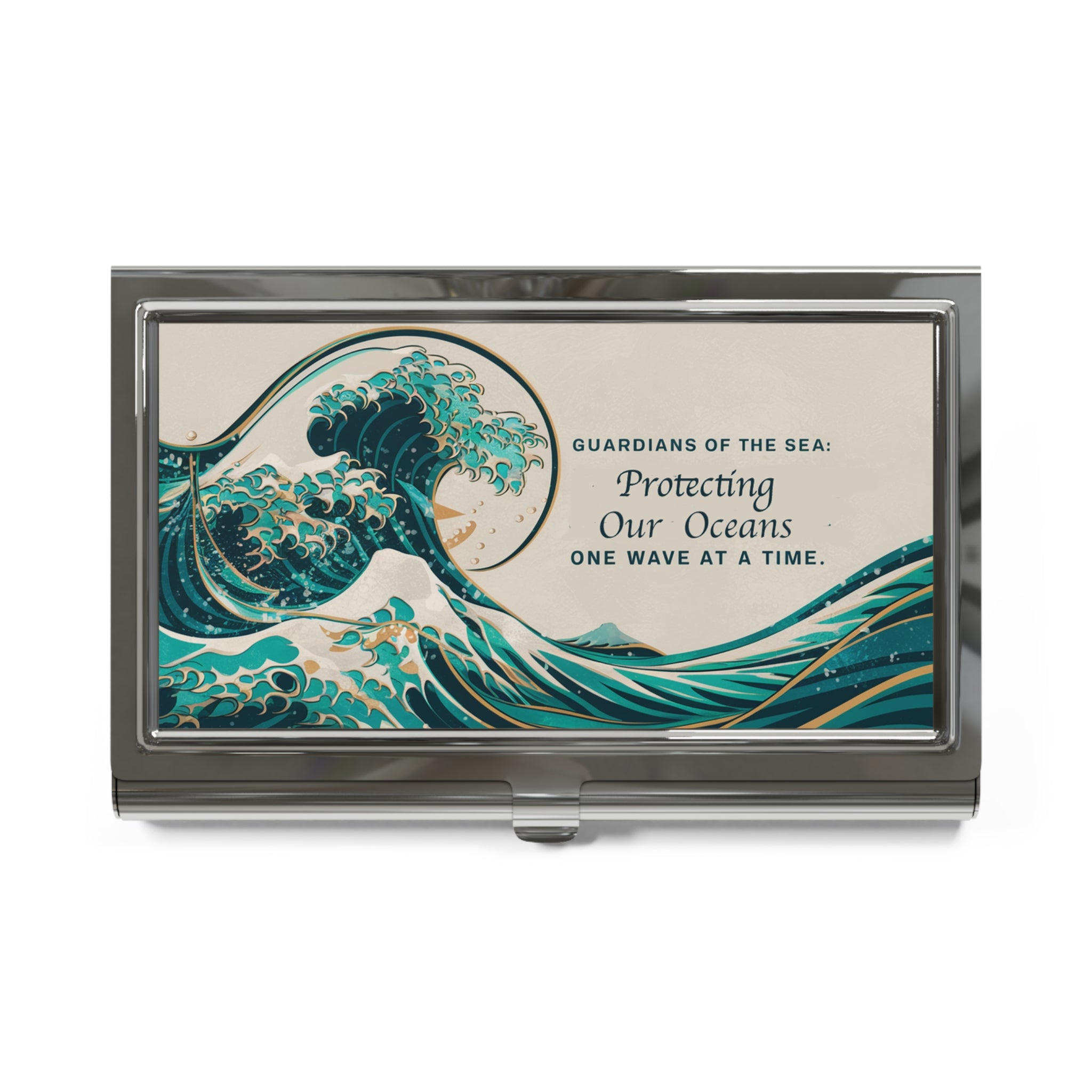
The real test of any donation is whether you can trace it to a specific change in a specific place. Ask the uncomfortable questions, read the filings, and support groups that answer clearly.
Get started with Sea Dragon Dreams and find ocean-inspired pieces that let your everyday choices support the waters you love.
Frequently Asked Questions
How can I verify if an ocean conservation charity is legitimate?
Check three things before you give. First, confirm the organization appears in the IRS Tax Exempt Organization Search, which shows whether a group holds 501(c)(3) status. Second, look for a published annual report and Form 990, which lists revenue, program spending, and executive compensation. Third, search the charity's name alongside terms like 'complaint' or 'settlement' to see if regulators or news outlets have flagged problems. A legitimate group will make these documents easy to find rather than burying them behind a donate button.
How do I track the impact of my ocean conservation donation?
Ask the charity what specific outcome your gift funds and how they report it. Good groups publish periodic updates with concrete measures, such as acres of habitat restored, pounds of debris removed, or research papers produced. If you give monthly, request a year-end summary of what your cumulative giving supported. Keep your own record of donation dates and amounts alongside any impact reports you receive, so you can compare claims year over year instead of relying on a single feel-good email.
Are small donations to ocean charities actually effective?
Yes, when they go to organizations with clear programs and low fundraising overhead. A $25 gift rarely funds a boat or a research vessel on its own, but pooled with thousands of similar gifts it pays for staff time, permits, and equipment. The key is choosing a group where a meaningful share of each dollar reaches program work. Recurring gifts of even $10 to $20 per month give charities predictable funding, which many say is more useful than one-time amounts of the same total.
What is the difference between ocean cleanup and ocean conservation?
Cleanup removes trash that is already in the water or on beaches. Conservation tackles the systems that put it there: fishing rules, plastic production, habitat protection, and policy advocacy. Both matter, but they produce different results. Cleanups show fast, visible wins like pounds of trash removed, while conservation work often takes years to show measurable change in species populations or protected areas. A balanced giving plan usually includes some of each, plus support for research that tells organizations where their efforts do the most good.


Leave a comment